
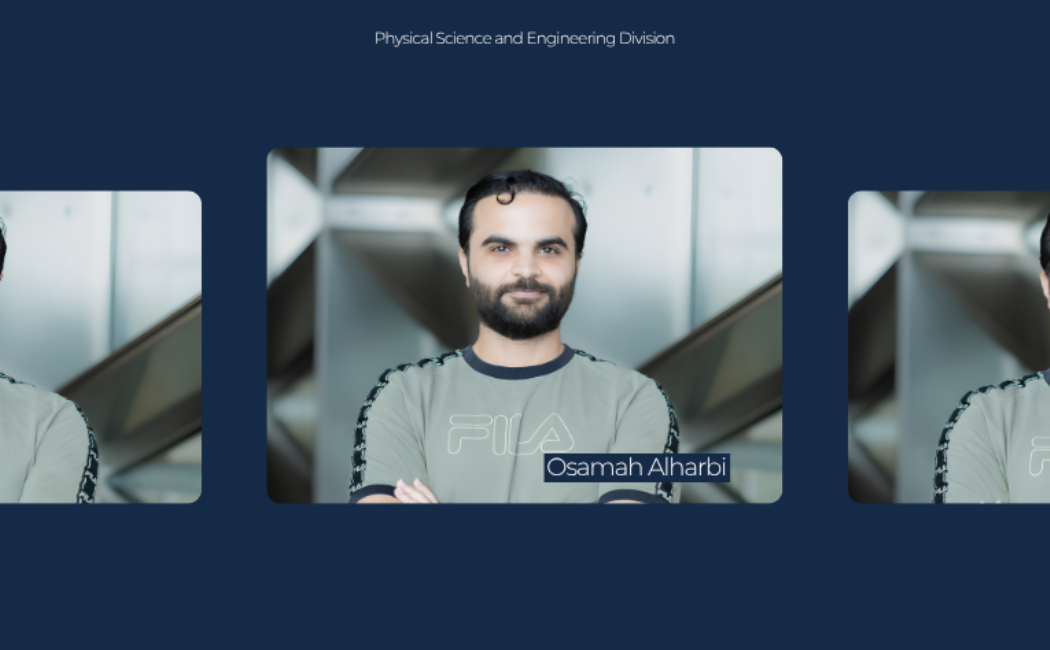
Earlier this year, Osamah Alharbi, a recent KAUST graduate, received the 2025 Scientific Research Mobility Scholarship between Saudi Arabia and France, a program administered by Campus France Saudi Arabia to foster scientific collaboration between the two countries.
The scholarship enabled Alharbi to spend three months at the University of Strasbourg working with internationally recognized chemist Paolo Samorì on one of the major unresolved problems in next-generation electronics: how to precisely “dope” two-dimensional (2D) semiconductors.
The Challenge of Doping 2D Materials
In semiconductor engineering, doping refers to the controlled introduction of chemical elements or molecules into a material to modify its electrical behavior — for example, improving conductivity or enabling faster, more energy-efficient devices.
While doping is routine in conventional silicon electronics, it becomes far more difficult in two-dimensional materials, which can be only a single atom thick. Traditional industrial techniques are often too aggressive and can damage the material itself.
Alharbi’s research focuses on developing less invasive approaches based on organic molecular building blocks capable of repairing atomic-scale defects while simultaneously tuning the material’s electrical properties.
“The challenge is finding a doping method that is controlled, reproducible and minimally invasive. These materials are extremely thin and delicate, so conventional approaches do not work well.”
Paving the Way for Industrial-Scale Manufacturing
His work focuses particularly on two-dimensional semiconductors such as molybdenum disulfide (MoS2), materials widely considered promising candidates for future printed electronics, wearable devices, and ultra-low-power sensors connected to the Internet of Things (IoT).
The approach developed during the collaboration combines lower fabrication costs with the ability to control conductivity both at the surface and across larger continuous films — a critical step toward industrial-scale manufacturing.
The collaboration contributed to two scientific publications, including a paper published in Advanced Materials.
“Osamah had great dedication and passion for learning new experiments, and his hard work and perseverance allowed him to collect, in a very short time, important data that contributed to publications. This is a clear example of a very fruitful research stay abroad.”
Following the collaboration, Alharbi was also offered a postdoctoral position in Samorì’s group and will continue his research in France starting in June.
Strategic Opportunities for Saudi Arabia
Alharbi, a Saudi student from Dammam, is particularly proud of having pursued his Ph.D. in Materials Science and Engineering at KAUST because he believes the field represents a strategic opportunity for Saudi Arabia, especially in sectors linked to renewable energy, thermal management, semiconductors, and lower-carbon industrial materials.
“Saudi Arabia may not have an R&D ecosystem able to directly compete with major electronics manufacturers such as Samsung Electronics, TSMC, Intel or NVIDIA. But it has the opportunity to lead in technologies designed for extreme operating conditions — heat, water stress and corrosion — where materials performance becomes critical.”
Through international collaborations, advanced research training, and global mobility opportunities such as this scholarship, KAUST continues to contribute to the development of Saudi scientific talent and a knowledge-based economy. Alharbi’s achievement reflects how Saudi students are increasingly participating in frontier research and building international scientific networks while remaining connected to national priorities.