
28 February, 2026
Energy systems can come under enormous strain from sudden changes in renewable generation, such as when sunlight rapidly increases as clouds pass, or when strong gusts hit a wind farm. A clean energy storage technology that handles these power peaks and troughs with ease, converting renewable electricity into green hydrogen, has been demonstrated by researchers at KAUST.
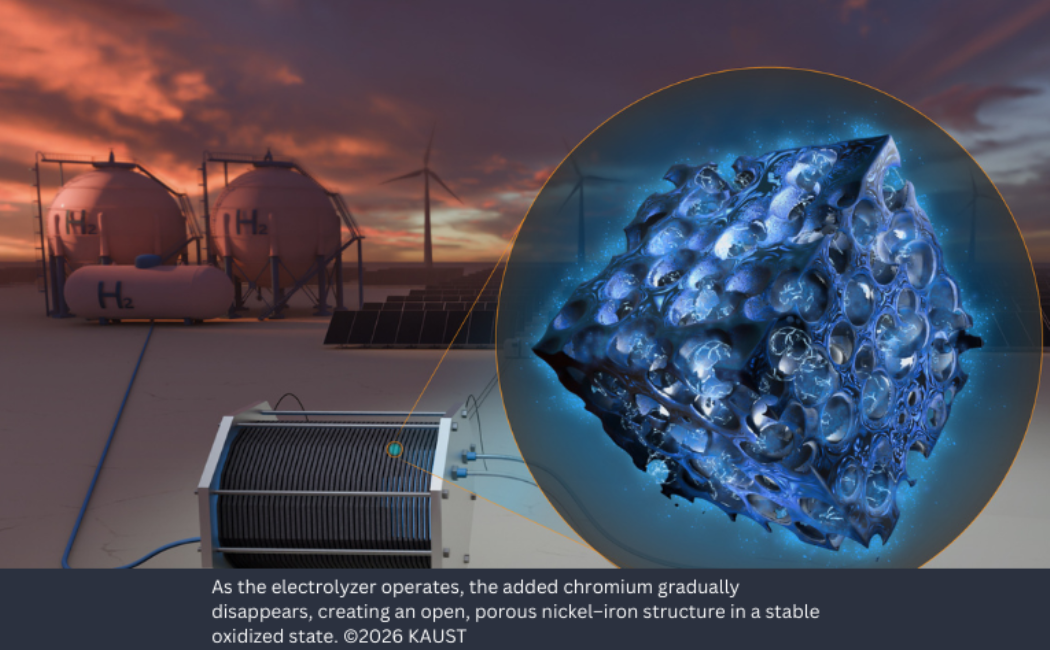
Storing renewable energy as clean hydrogen fuel is a critical element of future energy systems. Green hydrogen is made by using renewable electricity to split water molecules, using a device called an electrolyzer.
Today’s electrolyzers are poorly suited to this task. “Most water-splitting electrolyzers depend on steady electricity from the power grid — but that electricity often comes from fossil fuels, negating hydrogen’s environmental benefit,” says Abdul Malek, a postdoc in the lab of Xu Lu, who led the research.
One electrolyzer component highly vulnerable to sudden power surges is the water splitting catalyst. Low-cost nickel–iron (NiFe) catalysts work well when power supply is steady but can degrade rapidly when connected to renewable power sources that keep switching on and off, Malek explains. “Until now, there was no clear way to help such catalysts survive these harsh conditions for long periods,” he adds.
Read more at KAUST Discovery.