30
Nov 2026
PhD Dissertation
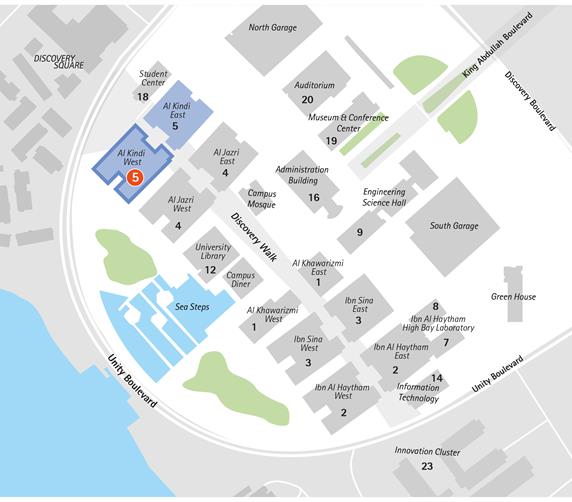
Fluorinated Metal-Organic Frameworks: Performance, Competitive Adsorption, and Design
Committee Members Information
- Ph.D. Advisor: Professor Mohamed Eddaoudi (KAUST, Chemistry)
- External Examiner: Professor Ryan Lively (Georgia Institute of Technology)
- Committee Chair: Professor Ingo Pinnau (KAUST, Chemical Engineering)
- 4th Committee Member: Nikolas Hadjichristidis (KAUST, Chemistry)
Abstract
Metal-organic frameworks (MOFs), owing to their tunable pore chemistry and structural diversity have emerged as promising platforms for gas adsorption and separation applications. This dissertation investigates the use of fluorinated MOFs across three studies spanning natural gas sweetening, competitive adsorption analysis, and new material design.
The first study evaluates the isostructural frameworks KAUST-7 and KAUST-8 for H₂S/CO₂ removal from simulated natural gas streams containing light hydrocarbons, aromatics, and water vapor. Single-gas isotherms, dynamic breakthrough experiments, cyclic stability testing, and thermal characterization reveal that KAUST-8, despite favorable acid-gas uptake in isolation, co-adsorbs substantial quantities of ethane and propane, undermining its practical utility. KAUST-7, in contrast, excludes light hydrocarbons while maintaining strong, humidity-tolerant H₂S/CO₂ capture, exhibits CO₂/H₂S selectivity that shifts favorably with temperature and pressure, and retains adsorption capacity after 1,000 adsorption–desorption cycles—establishing it as a strong candidate for industrial natural gas treatment.
The second study confronts a broader limitation in the field: single-component isotherms while necessary for determining the suitability of an adsorbent are not sufficient in the understanding the material’s behavior under mixed gas conditions, particularly for CO₂/H₂O. Focusing on NiNbOF5 (KAUST-7), this work directly measures binary CO₂/H₂O adsorption behavior across a concentration matrix spanning 0.25–15% CO₂ partial pressures and 0- 95% humidity.
The third study addresses a complementary design challenge: KAUST-7’s very high CO₂ affinity, while ideal for trace capture, makes it poorly suited to pressure swing adsorption (PSA), which requires moderate adsorption energetics. Using a mixed-ligand synthetic strategy. Pyrazine and bipyridine are combined to construct a rectangular-pore analogue, NiNbOF₅-pyz-bpy, to KAUST-7 in which each CO₂ molecule engages two fluorine atoms rather than four. The resultant framework has substantially reduced isosteric heat of adsorption (31.6 kJ mol⁻¹), high CO₂ uptake (6.6 mmol g⁻¹), and fast, fully reversible cycling behavior that outperforms the industrial benchmark Zeolite 13X under mild humidity.