Nov 2026
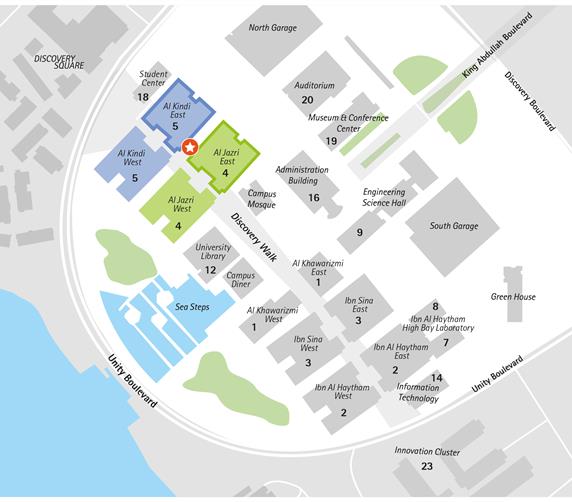
High resolution sequence stratigraphic and chronostratigraphic evolution from a mixed carbonate–siliciclastic ramp to an organic-rich intrashelf basin: Middle Jurassic (Late Bathonian–Late Callovian), Arabian Plate, Saudi Arabia
Abstract
The Middle Jurassic, Callovian succession of the Arabian Plate records the change from a flat, undifferentiated mixed carbonate–siliciclastic ramp to a differentiated carbonate shelf with an adjacent organic-rich intrashelf basin. This dissertation asks how that succession can be dated, when and how the intrashelf basin was initiated and what controlled it, and how the southern siliciclastic system relates in time and space to the carbonate shelf. Six new outcrop sections of the upper Dhruma and Tuwaiq Mountain formations were logged along the Tuwaiq Escarpment and correlated eastward with numerous subsurface wells, integrating microfacies analysis, calcareous nannofossil, benthic foraminiferal and ammonoid biostratigraphy, carbon and oxygen isotope stratigraphy, XRD and XRF analysis of the Hisyan marls, and gamma-ray log correlation. The resulting chronostratigraphy, supported by a Bayesian age–depth model, resolves the Callovian substages and two major hiatuses, shows a tenfold increase in accumulation rate at the base of the Middle Callovian, and tracks the carbon-isotope record through Middle Callovian warming and enhanced organic-carbon burial to late Callovian cooling and the sea-level fall at the Callovian–Oxfordian boundary. Eight lithofacies units and a platform-to-basin correlation define three stages of basin initiation: an early Callovian transgression, a siliciclastic pulse that reduced carbonate production while preserving ramp morphology, and a Middle Callovian transgression that drove aggradation, and back-stepping, with maximum flooding marked by a coral–stromatoporoid–serpulid reefal belt. In the south, tidal, prodelta, and fluvial facies date the Wadi ad Dawasir deltaic system to the latest Bathonian–Middle Callovian in two phases and record its drowning by open-marine carbonates; thickness and isotopic contrasts between the shelf and southern domains attribute the platform differentiation to differential subsidence, amplified by carbonate aggradation. The results are synthesized in three third-order sequences, a 600 km along-strike outcrop correlation, a chronostratigraphic framework, and paleogeographic maps from the Late Bathonian to the Late Callovian.