04

Nov 2026

Earth Systems Science and Engineering Seminar

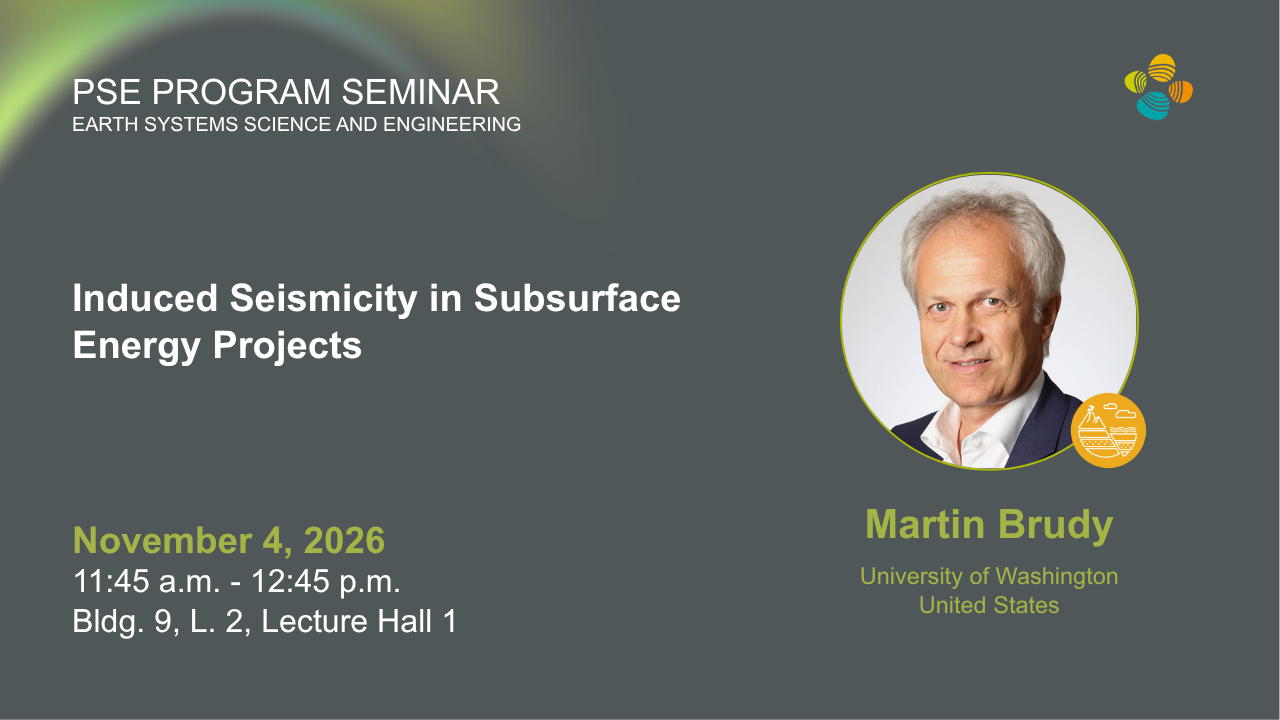
Induced Seismicity in Subsurface Energy Projects
 

Abstract

Mitigating induced seismicity is an important factor in achieving and maintaining public acceptance of subsurface projects, including CO₂ storage, geothermal energy development, and conventional oil and gas operations.
This presentation will introduce the geomechanical fundamentals of induced seismicity and examine the relationship between subsurface operations and seismic response using several well-documented case studies from around the world. Lessons learned from these projects will be used to discuss site selection, characterization, and operational strategies for CCS and geothermal projects that can help reduce the likelihood and potential impact of induced seismic events.
Microseismic monitoring plays a central role in managing seismic risk and is increasingly an integral—and in many jurisdictions mandatory—component of subsurface monitoring programs. Using the cloud-native C44 monitoring platform as an example, the presentation will introduce key concepts of an integrated microseismic monitoring workflow, including seismic network planning, event detection and localization, and Traffic Light Systems (TLS) for operational risk management.

The presentation will demonstrate how geomechanical understanding, appropriate project design, continuous monitoring, and operational response strategies can be combined to manage induced seismicity throughout the lifecycle of subsurface energy projects.

Biography

Martin Brudy has more than 30 years of experience in technology development and implementation in the energy industry. He co-founded Carbon Guardian to transfer technology and expertise developed in the oil and gas sector to emerging applications in the new energy industry and currently holds the position of CEO at Carbon Guardian.
Trained as a geophysicist, Martin received his Ph.D. for research on the stress field in the Earth’s crust as part of the German Continental Deep Drilling Program (KTB). He subsequently applied his expertise to wellbore stability research at Equinor’s R&D center before joining Geomechanics International (GMI), where he introduced 3D geomechanical modeling services.
Following GMI’s acquisition by Baker Hughes, Martin held a variety of technology leadership positions, with responsibility for developing and implementing the software tools underpinning the entire set of the company’s field services.

Event Quick Information

Date
04 Nov, 2026
Time
11:45 AM - 12:45 PM
Venue
KAUST, Bldg. 9, Level 2, Lecture Hall 1