Oct 2026
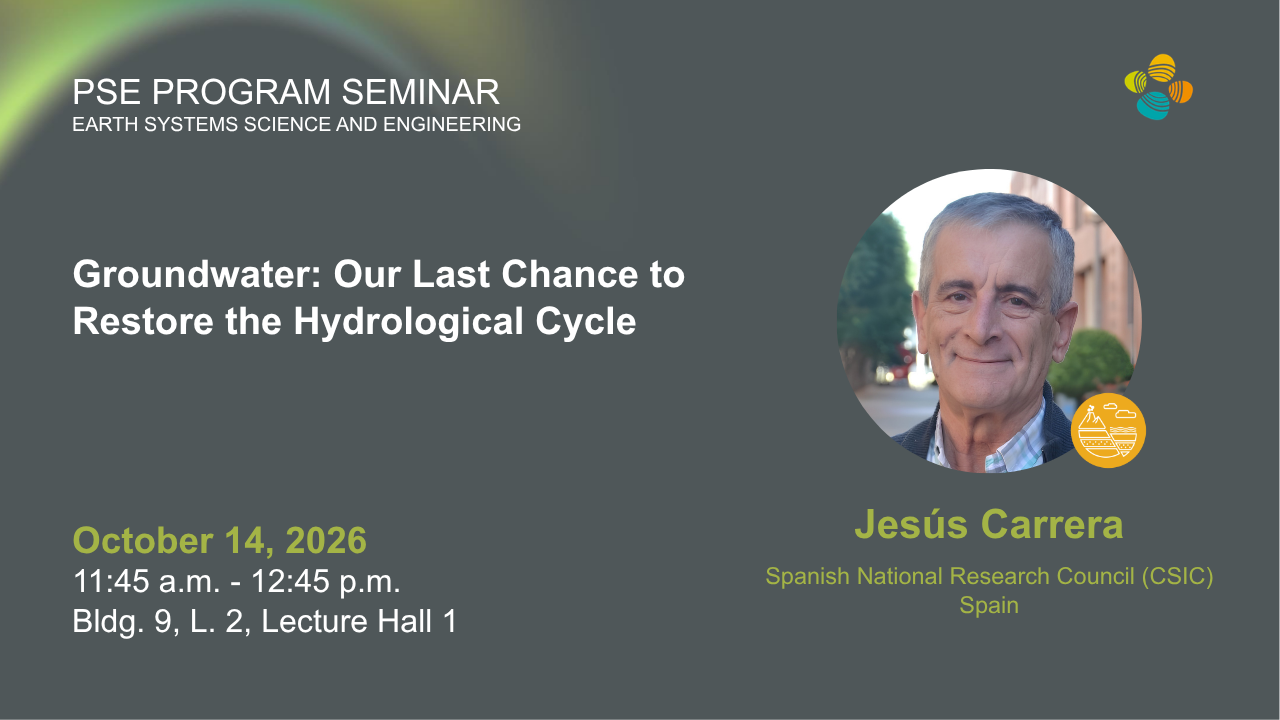
Groundwater: Our Last Chance to Restore the Hydrological Cycle
Abstract
Groundwater plays many roles in the natural and human water cycles. Beyond representing the largest available water reserve, filtration ensures that it is free of turbidity and pathogens, and the long residence time in aquifers ensures the degradation of the most recalcitrant compounds. All of this explains why groundwater usually displays excellent quality and represents the main source of drinking water worldwide. In addition to its human use, groundwater feeds surface water bodies and provides resilience of the hydrological cycle. Rivers flow during droughts because (if) they are connected to aquifers. Riparian forests are fed by alluvial aquifers. River-aquifer interactions are fundamental to aquatic ecosystems. Biochemical reactions in the hyporheic zone produce biofilms that are the substrate for microorganisms found at the root of multiple food chains. This process, which has ensured the quality of rivers and aquifers for millions of years, is being compromised by a combination of three factors: overexploitation of aquifers (groundwater is cheap to pump, but difficult to regulate), climate change (increased extremes can lead to reduced recharge), and increased pollution (worsened by the loss of ecosystem services). In this presentation I argues that reversing this trend requires managed aquifer recharge. I discuss its feasibility for floodwater and reclaimed water. The former is difficult because it is highly concentrated in time, but there are examples of successful cases. The latter is hampered by a lack of tradition and regulatory ambiguities. I show that, especially when a reactive barrier is in place, it eliminates pathogens and dramatically reduces concentrations of nutrients, emerging compounds, particularly endocrine disruptors, microplastics, or antimicrobial resistance. All of this points to managed aquifer recharge as our last chance to restore the hydrological cycle.
Biography
Jesús Carrera is a hydrogeologist who graduated as a Civil Engineer by the Technical University of Madrid (1979) and PhD the University of Arizona (1984). His research has evolved from groundwater modeling with emphasis on the inverse problem to reactive transport. He has applied his results to problems ranging from water resources assessment to waste disposal, CO2 storage, geothermal energy, induced seismicity, groundwater pollution, and Managed Aquifer Recharge.