Oct 2026
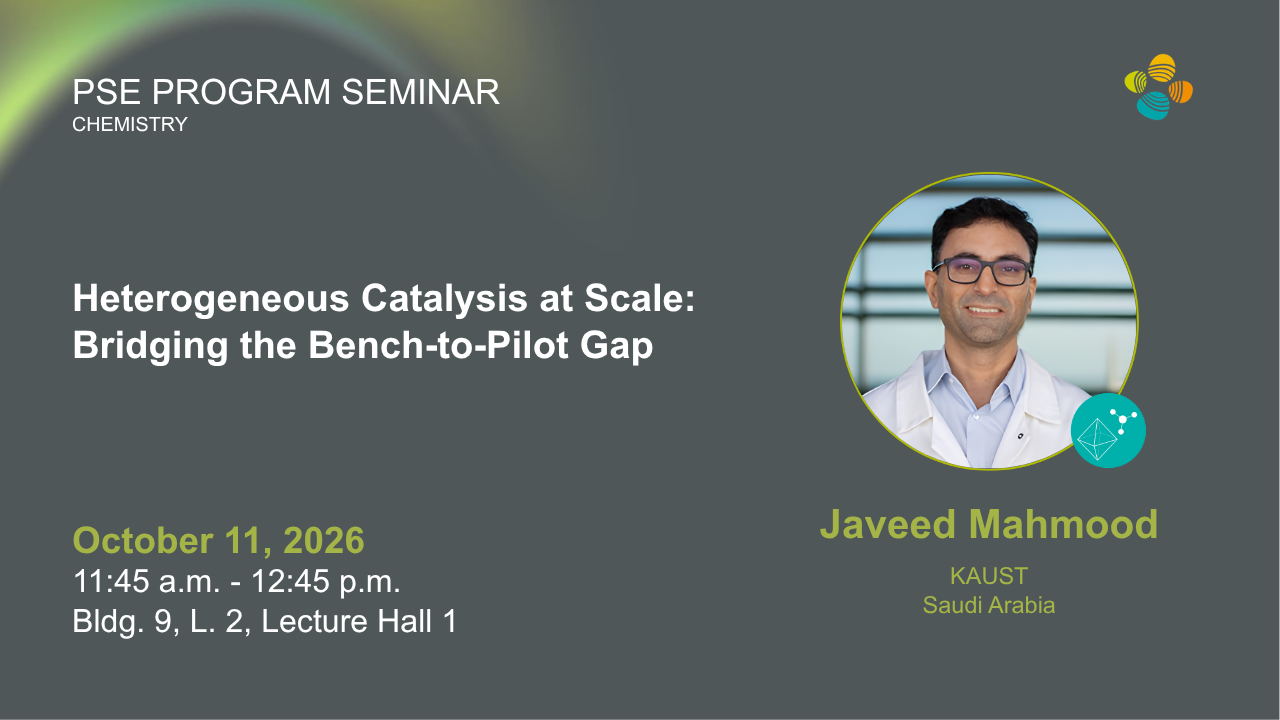
Heterogeneous Catalysis at Scale: Bridging the Bench-to-Pilot Gap
Abstract
Translating promising laboratory catalysts into practical chemical processes requires advances in catalyst manufacturing and sustained operation under realistic conditions. In this seminar, I will present our laboratory’s work on two complementary pathways for resource utilization and hydrogen production: methane dry reforming and hydrogen sulfide cracking. For dry reforming, we discuss the development of Ni─Mo catalysts to convert methane and carbon dioxide into syngas, emphasizing catalyst scale-up, shaping, coke management, and integration into reactors suitable for pilot-scale evaluation. For hydrogen sulfide cracking, we explore the conversion of H2S into hydrogen and elemental sulfur, highlighting the interplay between catalyst performance and sulfur recovery. Particular attention is given to operational challenges, including sulfur deposition and piping blockage, that must be addressed to enable continuous processing. Together, these case studies illustrate how heat and mass transfer, catalyst stability, product handling, and reactor design influence the transition from bench-scale activity to reliable process performance. The seminar outlines our progress, remaining barriers, and development priorities for bridging the bench-to-pilot gap, with an emphasis on scalable systems relevant to the utilization of greenhouse gases and sour-gas resources.