Mar 2026
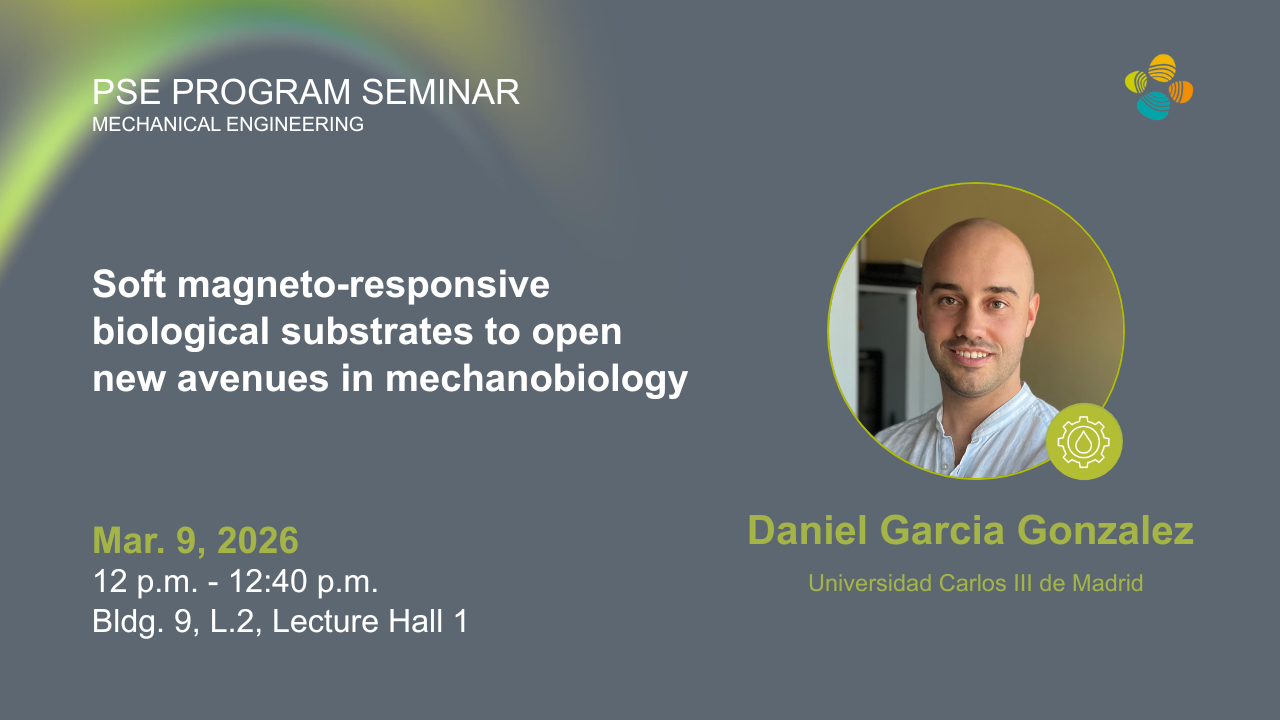
Soft magneto-responsive biological substrates to open new avenues in mechanobiology
Abstract
Current research in biomechanics and mechanobiology faces critical limitations to control the mechanical environment (i.e., deformation, stiffness) of biological systems. A significant limitation exists in the real-time control and remote actuation of the mechanical environment. We present a novel experimental framework to modulate the mechanical properties of cell substrates using magnetorheological elastomers (MREs) and magneto-responsive hydrogels. We demonstrated reversible mechanical changes in substrates of more than one order of magnitude in stiffness and large local deformations (>30%). In parallel, we developed a multiscale computational model to guide the experimental testing. The whole experimental-computational framework is coupled to a customised imaging system for live cellular assays that allows for magneto-mechanical stimulation in real time. In addition, we coupled the system to nanoindentation instruments to enable the measurement of local changes in cellular mechanical properties during substrate deformation. Finally, the complete system is used to study the response of astrocytes to mechanical deformation by means of dynamic changes in morphology, stiffness and functional responses. Other applications of the system also allow for studying cell-extracellular matrix interactions under evolving mechanical scenarios or adapting the methods to tissue samples. These results offer direct benefits for health purposes by paving the path to models to simulate dynamic mechanistic-mediated biological processes as well as testing and design of new therapeutics. Related recent works: 1. C. Gomez-Cruz et al., Advanced Materials, 2024: https://doi.org/10.1002/adma.202312497 2. D. Garcia-Gonzalez et al., Advanced Intelligent Systems, 2024: https://doi.org/10.1002/aisy.202400638 3. J. Gonzalez-Rico et al., Journal of the Mechanics and Physics of Solids, 2024: https://doi.org/10.1016/j.jmps.2024.105791
4. D. Garcia-Gonzalez, Biophysical Reviews, 2025: https://doi.org/10.1007/s12551-025-01379-7
5. E. Gonzalez-Saiz et al., Advanced Science, 2025: https://doi.org/10.1002/advs.202506790
6. C. Perez-Garcia et al., Advanced Materials, 2025: https://doi.org/10.1002/adma.202518489
Biography
Dr. Garcia-Gonzalez is Associate Professor at Universidad Carlos III de Madrid. He has been granted national and international projects, highlighting an ERC Starting Grant and two ERC Proof of Concept. All these efforts have allowed him to create and lead a new lab and multidisciplinary group (MULTIBIOSTRUCTURES Lab). He puts together computational and experimental facilities to address timely challenges in advanced multifunctional materials and mechanistically mediated biological processes. In 2023, he was elected to join the Young Academy of Spain to represent research excellence from young researchers in Spain, and he is currently the Secretary-General. In 2023 he received the National Award of Science (highest distinction in Spain) and co-founded the spin-off 60Nd. Webpage of the group: https://www.multibiostructures.com/ (although I need to update many things here!)