Dec 2025
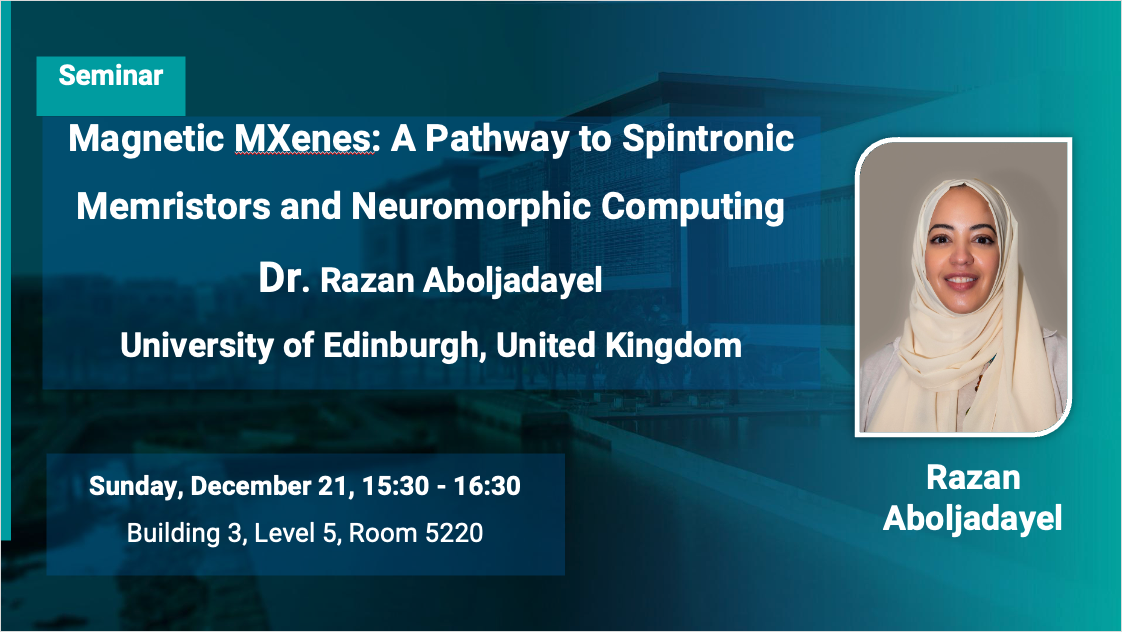
Magnetic MXenes: A Pathway to Spintronic Memristors and Neuromorphic Computing
Abstract
The explosive growth of AI, Big Data, and the Internet of Things is driving an urgent need for energy-efficient, high-density computing technologies. Magnetic and spintronic systems offer key advantages—non-volatility, scalability, and low-power operation—that position them as strong candidates for overcoming the von Neumann bottleneck in future computing and memory architectures. In this talk, I will present an overview of how lab-based fabrication and characterization methods can be combined with advanced measurement techniques available at large-scale facilities, including neutron, X-ray, and muon sources, to probe nanoscale magnetic behavior and explore new material functionalities. Selected examples will illustrate how these complementary approaches uncover essential magnetic and structural features that inform the design and optimization of emerging device concepts for future technologies.
Biography
Razan Aboljadayel, is a Postdoctoral Research Fellow at the University of Edinburgh, specialized in condensed matter physics with a focus on magnetic thin films and devices for next-generation spintronics applications and energy-efficient computing. Her work combines lab-based methods and advanced techniques at large-scale facilities to explore emergent magnetic materials for neuromorphic applications.
After completing her PhD at the Cavendish Laboratory, University of Cambridge, Razan worked across several UK institutions, including Diamond Light Source synchrotron facility. She has led large international collaborations and established a strong track record of securing fully funded beamtimes at some of the world’s most competitive beamline facilities.
Razan currently leads the magnetic research domain within the Centre of Electronic Frontiers, where she develops magnetic-based memristors, including skyrmion-based memristor architectures for AI hardware applications. Her long-term vision is to bridge the gap between understanding fundamental magnetism and realizing CMOS-integrated spintronic devices.